
Today is International Women’s Day (IWD). What does this mean exactly and why should you care?
Women make up just under half of the world’s population. That’s 49.7% of humans on the planet as of 2023*, or 4.01 billion people.
Let’s turn back the clock to over a century ago in 1910, when the world population was a fraction of what it is today: 1.75 billion—all in. That very same year, at the second International Conference of Working Women in Copenhagen, spurred by a labour movement, journalist and feminist Clara Zetkin proposed the idea of an International Women’s Day. It took off across Europe, and gained enough momentum that by 1921, the annual date officially became March 8th.
IWD is intended to symbolize gender equality, but equality assumes everyone has the same starting point or circumstances. Equity is different. Equity recognizes that people have different circumstances and needs.
Equity provides the right kind of resources and supports to achieve equal outcomes.
Looking back at the last lucky-seven years of my life since my estrogen-receptor positive cancer went into remission, I have become wholeheartedly invested in educating myself about women’s health. I think about it all the time: for my daughter approaching post-secondary, her friends, my sister, nieces, mother inching closer to 90—even for myself, for my husband’s sake. He’s been my wingman since high school and he (shockingly) wants me to stick around a while longer. So I try to stay healthy, in body and mind!
Inevitably I’ve had to question what gender equity truly means in medicine when I understand the research gaps. I think the best way to understand gender equity in the medical community is to take a page out of modern history and note—what—if anything, has changed in the attitudes and behaviours on the study of women’s health over the past half-century since I became a speck of dust on this overpopulated planet.
The status of women’s health research.

The medical world first heard the term ‘bikini medicine’ from clinical cardiologist Dr. Nanette Wenger, in the 1980s. Dr. Wenger was one of the first women to attend Harvard Medical School, receiving her doctor of medicine degree in 1954. She became one of the first doctors to focus on heart disease in women since it was initially thought to primarily affect men, and she devoted her entire career to speak up for gender-specific analyses from clinical trials on heart health.
It was out of frustration with her peers that Dr. Wenger coined the term ‘bikini medicine’ to highlight the medical field’s limited focus on the parts of a woman’s body covered by a bikini.
Fast-forward to my personal discovery of the term ‘bikini medicine’ used by Neuroscientist Dr. Lisa Mosconi, PhD, last year on the Rich Roll Podcast. Author of The Menopause Brain, Dr. Mosconi has been all over my (decidedly limited use of) social media lately, using every platform she has to speak up for gender-specific analyses from clinical trials on brain health. Her work may provide the answers as to why two-thirds of all Alzheimer’s patients are women.
In her research on Alzheimer’s, Dr. Mosconi asked her peers for the brain scans of women going through perimenopause to test a theory. She sought to validate her hypothesis on the impact of hormonal fluctuations to the assigned female at birth (AFAB) brain during the perimenopausal life stage as a key indicator of cognitive decline. (The three greatest possible hormonal fluctuations in an AFAB person are: in puberty, during pregnancy—if relevant, and the years while perimenopause lasts.)
What Dr. Mosconi learned was that not one single study has been published yet on this type of research. As an innovator, rather than accept the common complacency in medicine that women are too hard to study due to the variability from person to person, she has called upon her field to try harder.
Through hormonal health research, Dr. Mosconi is on a mission to prove that the elusive human brain contains the key to what modern medicine needs to know about women’s health in order to change our outcomes and improve our quality of life. Based on her preliminary brain scan research she has discovered that, as estrogen decreases in the brain between the time when a woman’s period begins to end (perimenopause) and the time when it fully comes to an end (menopause), a woman’s brain structure can change drastically.
The research gap on women.
Even a middle school boy can tell you that menstruation is where female bodies differ from male bodies, but as Dr. Mosconi points out on her website –
Menopause and perimenopause are still a black box to most doctors.
So what makes women’s health unique? It’s still—too hard to say. Correction—too hard to study, apparently. Learning about this brain-health connection to the XX chromosomal person’s condition, from puberty through menopause, has piqued my interest and pissed me off.
In the timeline of women’s health research since the 1960’s, as outlined in The State of Women’s Health Research Report: A Path to Equitable Outcomes, published by FemTech start-up MyNormative in October 2024, until fairly recently women’s health studies were focused merely on reproduction and healthy childbirth outcomes. Bikini medicine.
It wasn’t until 1986 when the American National Institutes of Health (NIH) advisory committee recommended that women should be included in their medical research studies. The inclusion of women was not mandated by the USFDA until 1993. If you’re a 30-year-old woman reading this (at time of publication), the mandate only happened when you were in diapers. Think about this for a minute. It wasn’t that long ago!! It was only in 2001 that the Institute of Medicine released a report demonstrating how sex difference influences biology, concurring that these differences should (finally, at long last) be studied as a variable in clinical research.
It’s disturbing to know that all this time, a male proxy will often be substituted for data collection. “Today, many researchers—both publicly and privately funded – still don’t fully account for sex and gender variability in their studies, citing either the ‘complexity’ of including more accurate data collection and analysis, or the ‘adequacy’ of a male proxy.” (Bruinvels et al., 2017)
According to MyNormative’s report noted above, as of 2022, a Harvard Medical School study noted that women—half the world’s population—were still substantially underrepresented in clinical trials for leading diseases. (Harvard—that very same revered institution which Dr. Nanette Wenger graduated from 68 years earlier.) Talking about a symbolic day as International Women’s Day seems arbitrary without action.
And since it’s Brain Health Month…
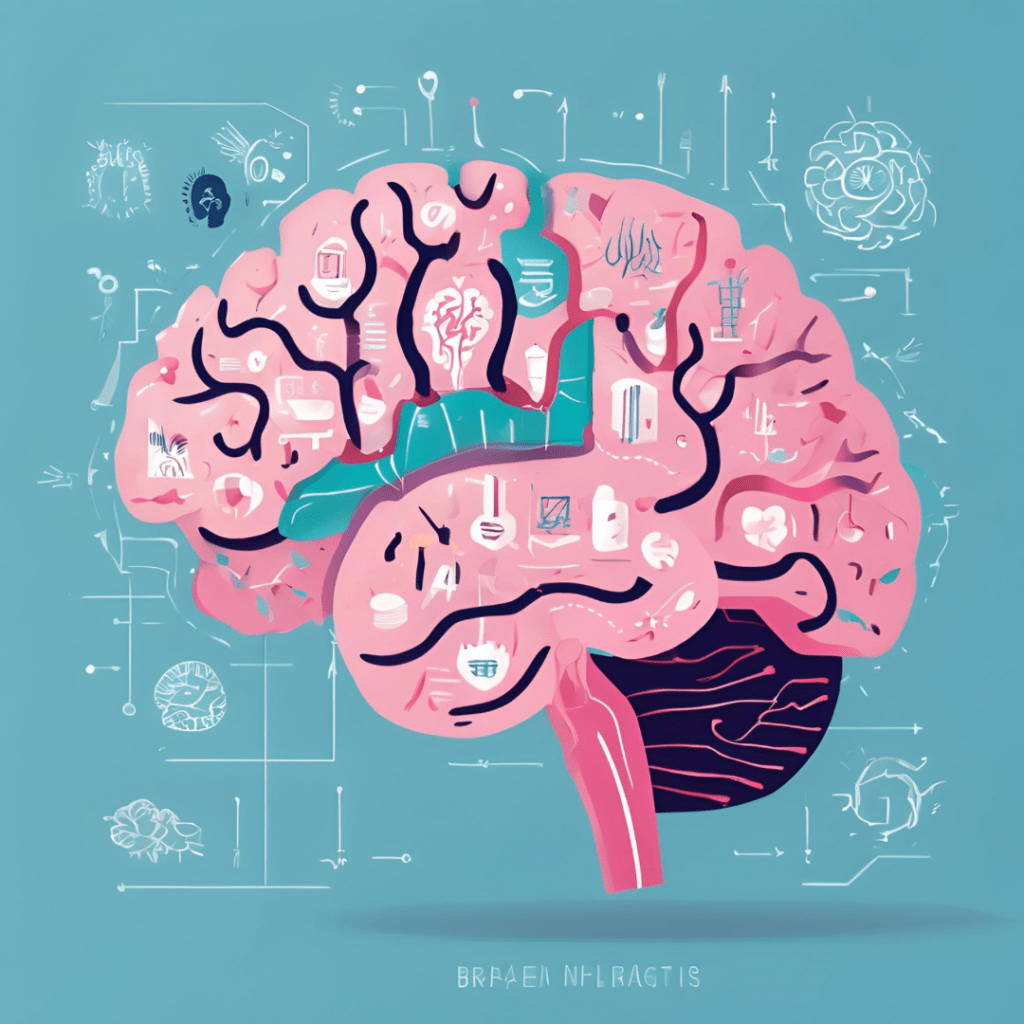
As Dr. Mosconi makes painfully clear, brain health is one of the domains where the knowledge gap cuts deep. Women’s health is underfunded and under-researched. This needs to change. It’s time to recognize the divide in research, diagnosis, and support—especially for women whose neurobiology has been misunderstood for FAR too long.
Though the term ‘neurodiversity’ arose in the 1990s and is now talked about in mainstream media, the neurodiversity movement is relatively young. My hope is that studies like Dr. Mosconi’s will help science advance towards understanding other aspects of brain health in women, such as neurodiversity.
Neurodiverse conditions like Autism and ADHD in girls and women look different than in boys and men. Due to the history of ADHD studies having primarily focused on hyperactive little boys, and with the classic ‘socialization’ of females, ADHD in girls was—and still is—overlooked.
As with ADHD in boys, girls with ADHD don’t simply outgrow their neurological wiring. It’s part of their being. It impacts how they learn, behave and socialize—and research is now suggesting that once again, hormonal health plays a unique role for this gender-set with ADHD (and Autism).
Clinical Psychologist Dr. Ellen Littman, has specialized in understanding those with neurodiverse brains for 35 years. In a webinar hosted by ADDitude Magazine last week, she shared that while they don’t understand what is happening to them, they can build complex scaffolding to help them find their way in a world not designed to support their needs. Yet as the medical and social issues effecting females with undiagnosed neurodiversity expand, they tend to cope in unhealthy ways.
On top of having hormones that change on the regular—add to this an accumulation of poor self-esteem to the point they compare themselves harshly to peers and will increasingly isolate themselves from others. Some, will self-harm.
Contrary to recent popular opinion, ADHD is under-diagnosed in women more than in other gender identities or children. Women who receive delayed diagnoses may have spent one, two, or in cases like my own—three or more decades having no scientific overarching understanding of why we struggle, filling in the blanks as we go—assuming it’s all in our character vs. part of our chemistry.
Earlier this week I met with Cynthia Hammer, Founder of FindtheADHDGirls. Like me, Cynthia is a late-diagnosed female with ADHD, and as she tells us on her website: “I don’t want any ADHD girls to feel as different or alone as I did.” I don’t either.
A childhood ADHD diagnosis can improve the trajectory of a girl’s future and potentially—save her life. Knowing what I know today about how pathetically slow research has gone for Women’s Health, I expect more from funding bodies in support of medical research.
Women, and the men (or women, or others) who love them, should demand more from research, clinical trials, the medical community and government. I’ve had to ‘try harder’ all my life just to fit in.
Medical community, it’s your turn to try harder. It’s been International Women’s Day for over 100 years. Rather than run away from the effort required to study the complexities of one person’s menstrual cycle or perimenopausal symptoms at a time, isn’t it time you fill in more of the gaps? Try harder.
By Penny Greening
*Source: Statista.com
 Body of Positive